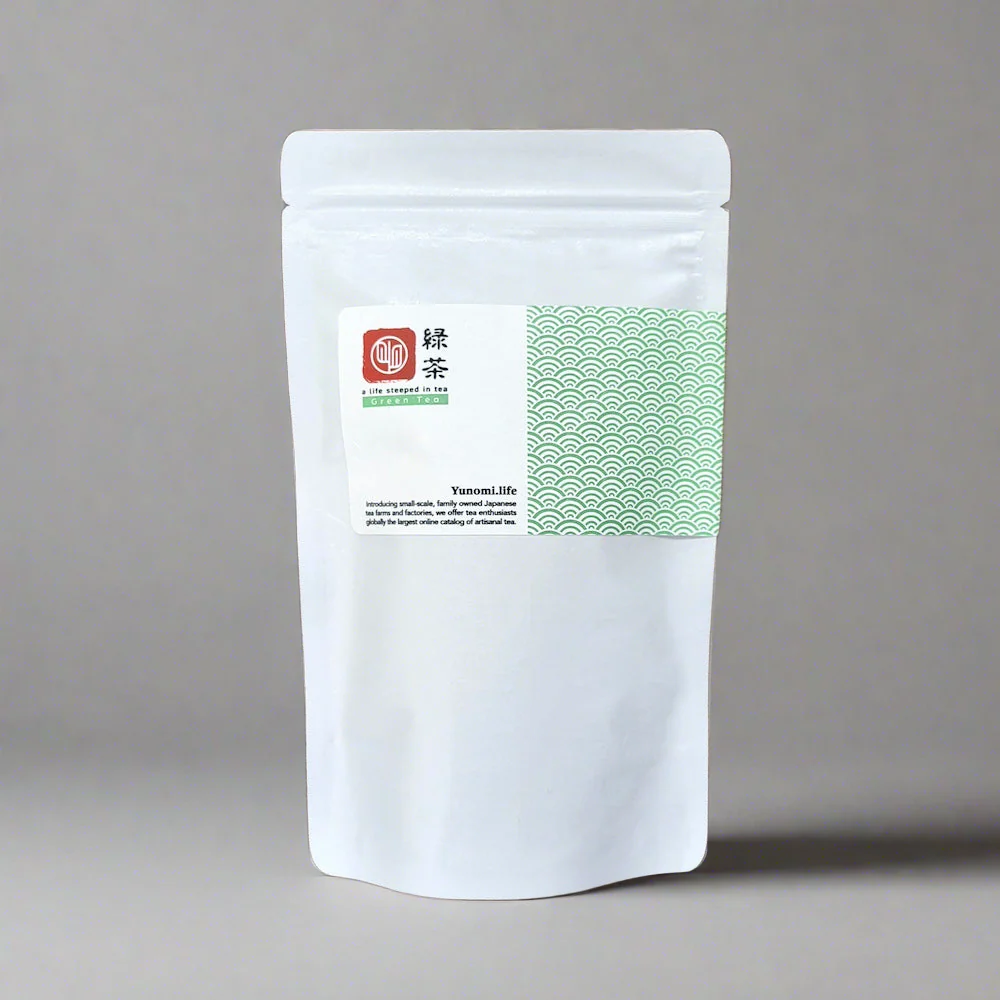

#0097.K6 Azuma Tea Garden: Kyoto Oolong Tea, Single Cultivar Samidori
The Azuma family’s oolong tea is made with specific cultivars from single fields. Without using pesticides, small insects called unka populate the field in the early summer and damage the leaves in a way that turns into a delicious flavor when the leaves are withered into oolong tea. The process is similar to that seen in the Taiwanese oolong called Oriental Beauty.
Product Info
-
Ingredients: Oolong tea
- Cultivar: Samidori
- Harvest Season: Summer
- Region: Kyoto Prefecture
Steeping Info
- Steeping - Tea: 5 grams. Time: 3~5 minutes. Water: 80~100˚C/176~212˚F, 200cc~300cc.
- Drinking tea cold or with milk or sugar also good.
- The amounts above are guidelines. Adjust to preference.
- Consider also advanced steeping techniques such as cold or ice steeping (see Steeping Techniques).
About The Azuma Tea Garden
The Azuma family has been farming tea in Wazuka Village since the late 19th century. Four generations of farmers have been cultivating tea leaves for matcha, gyokuro, senchaas well as expanding to black tea and oolong tea production. In recent years, they have switched recently to organic farming (currently in the process of certification)
More Images
#0097.K6 Azuma Tea Garden: Kyoto Oolong Tea, Single Cultivar Samidori
The Azuma family’s oolong tea is made with specific cultivars from single fields. Without using pesticides, small insects called unka populate the field in the early summer and damage the leaves in a way that turns into a delicious flavor when the leaves are withered into oolong tea. The process is similar to that seen in the Taiwanese oolong called Oriental Beauty.
Product Info
-
Ingredients: Oolong tea
- Cultivar: Samidori
- Harvest Season: Summer
- Region: Kyoto Prefecture
Steeping Info
- Steeping - Tea: 5 grams. Time: 3~5 minutes. Water: 80~100˚C/176~212˚F, 200cc~300cc.
- Drinking tea cold or with milk or sugar also good.
- The amounts above are guidelines. Adjust to preference.
- Consider also advanced steeping techniques such as cold or ice steeping (see Steeping Techniques).
About The Azuma Tea Garden
The Azuma family has been farming tea in Wazuka Village since the late 19th century. Four generations of farmers have been cultivating tea leaves for matcha, gyokuro, senchaas well as expanding to black tea and oolong tea production. In recent years, they have switched recently to organic farming (currently in the process of certification)
Product Information
Product Information
Shipping & Returns
Shipping & Returns
Description
The Azuma family’s oolong tea is made with specific cultivars from single fields. Without using pesticides, small insects called unka populate the field in the early summer and damage the leaves in a way that turns into a delicious flavor when the leaves are withered into oolong tea. The process is similar to that seen in the Taiwanese oolong called Oriental Beauty.
Product Info
-
Ingredients: Oolong tea
- Cultivar: Samidori
- Harvest Season: Summer
- Region: Kyoto Prefecture
Steeping Info
- Steeping - Tea: 5 grams. Time: 3~5 minutes. Water: 80~100˚C/176~212˚F, 200cc~300cc.
- Drinking tea cold or with milk or sugar also good.
- The amounts above are guidelines. Adjust to preference.
- Consider also advanced steeping techniques such as cold or ice steeping (see Steeping Techniques).
About The Azuma Tea Garden
The Azuma family has been farming tea in Wazuka Village since the late 19th century. Four generations of farmers have been cultivating tea leaves for matcha, gyokuro, senchaas well as expanding to black tea and oolong tea production. In recent years, they have switched recently to organic farming (currently in the process of certification)